In 2025, the impact of artificial intelligence (AI) on jobs is clearer than ever. Across industries, AI has become a defining force, transforming traditional roles while creating brand new categories of employment that didn't exist three years ago.
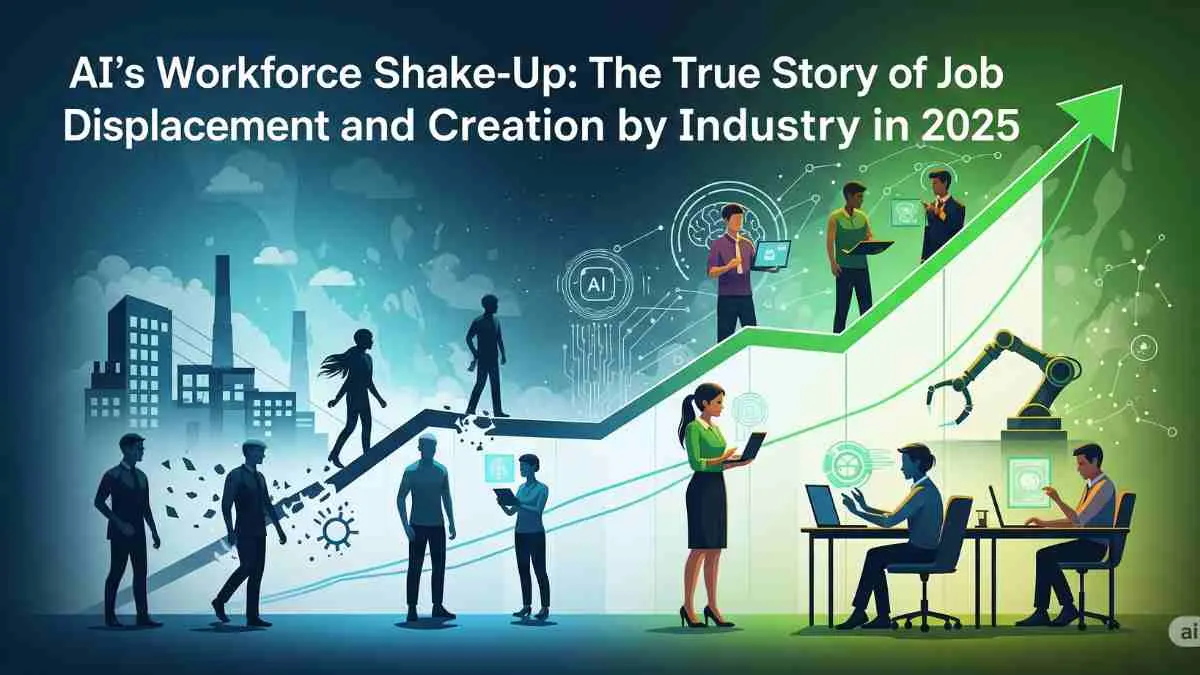
Rather than a uniform wave of job destruction, 2025 data reveals an uneven tectonic shift: routine cognitive tasks are being automated at unprecedented speed, while roles centered around strategic synthesis, human empathy, and domain governance are commanding record compensation.
The Industries Experiencing Severe Displacement
Three sectors have experienced the sharpest decline in headcount for entry-level and repetitive roles:
- Customer Support & Call Centers: Autonomous voice and conversational agents now resolve over 75% of Tier-1 inquiries with near-zero latency, reducing support department overhead by up to 60%.
- Basic Copywriting & Content Production: Standard SEO filler, product descriptions, and boilerplate reporting are overwhelmingly generated and scheduled autonomously.
- Junior Data Entry & Document Analysis: Multimodal vision models process invoices, contracts, and medical paperwork in seconds, drastically cutting manual processing queues.
The Explosion of New High-Value AI Careers
On the flip side, workforce demands have created dynamic new career pathways:
- AI Integration Architects: Specialized engineers who connect foundational models to enterprise legacy databases, ERP systems, and private vector stores.
- AI Safety & Compliance Auditors: Professionals tasked with testing models against hallucination thresholds, bias constraints, and strict data privacy regulations.
- Human-in-the-Loop Domain Specialists: Medical, legal, and financial veterans who review and calibrate automated decisions before final execution.
Adapting to the Future of Work
The lesson of 2025 is unmistakable: AI will not replace human workers, but professionals proficient in orchestrating AI agents will rapidly replace those who ignore them. Continuous upskilling and embracing hybrid workflows remain the most effective career safeguard.