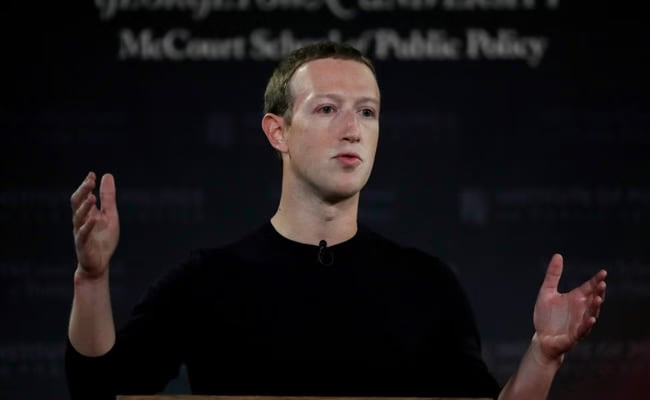
I couldn’t help but notice the buzz when Mark Zuckerberg, the Meta CEO, made his headline-grabbing return to Twitter (now X) after an 11-year hiatus, sparking ripples across the entire social media landscape.
Zuckerberg’s last tweet dated back to 2012. His sudden reappearance—posting the famous pointing Spider-Man meme the very morning Meta launched Threads—was not just a viral joke; it was a calculated masterclass in competitive psychological warfare and brand positioning.
The Strategy Behind the Meme
By entering Elon Musk’s digital territory to promote a direct rival, Zuckerberg accomplished three critical tactical objectives:
- Maximum Earned Media: Every major global news outlet covered the tweet, generating tens of millions of dollars in free publicity for the Threads launch.
- Shifting Public Perception: Zuckerberg reframed his public persona from a buttoned-up corporate executive into an audacious challenger willing to have fun in public arenas.
- Direct Competitive Disruption: It signaled to advertisers and creators that Meta was fully committed to challenging X's dominance over real-time public conversation.
The Battle for the Real-Time Town Square
Social media has entered a multi-polar era. Rather than one single platform monopolizing digital discourse, users and creators are diversifying across Threads, X, Bluesky, and specialized algorithmic networks. Zuckerberg's bold gambit proved that legacy tech giants can still move with startup speed and cultural relevance.